Monday, June 11, 2012

The Abbey of Saint-Denis

The first Gothic building:


The Abbey of Saint-Denis (in France)


The ambulatory at the Abbey of Saint-Denis.

France

Gothic architecture began in:


France

Sunday, June 10, 2012

Jericho

The earliest surviving evidence of a town, located on the Jordan River, where the settlement began around 7500 B.C.:


Jericho

Dwelling foundations unearthed at Tell es-Sultan in Jericho


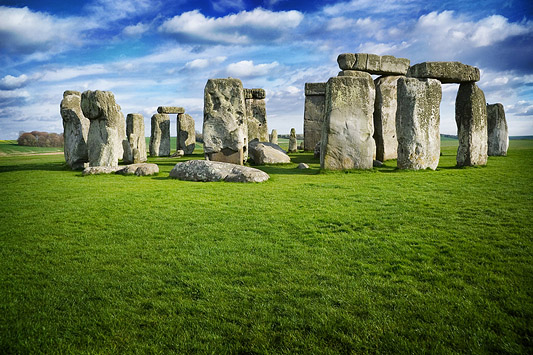
Megalith

A large stone that has been used to construct a structure or monument, either alone or together with other stones:


Megalith


Stonehenge, Wiltshire, United Kingdom, is one of the world's best known megalithic structures.

Neolithic

The last part of the Stone Age, a period in the development of human technology beginning about 10000 years ago, ending when metal tools became widespread in the Bronze Age:


Neolithic

Lower Paleolithic


The prehistoric period of human history which spans the time from around 2.5 million years ago when the first evidence of craft and use of stone tools by hominids appears in the current archaeological record, until around 300,000 years ago:


Lower Paleolithic


The Paleolithic Age, a prehistoric period of human history distinguished by the development of the most primitive stone tools discovered, contains three subdivisions:

Lower Paleolithic [2.5 million to 300,000 years ago]
Middle Paleolithic [300,000 to 30,000 years ago]
Upper Paleolithic (or Late Stone Age) [40,000 and 10,000 years ago]

Saturday, June 9, 2012

Terra Amata

The earliest known structures built by humans are at:


Terra Amata

Terra Amata is an archeological site in southern France.

Sexagesimal

A numeral system with sixty as its base:


Sexagesimal (or Sexigesimal)

Sexagesimal originated with the ancient Sumerians in the 3rd millennium BC, it was passed down to the ancient Babylonians, and it is still used — in a modified form — for measuring time, angles, and geographic coordinates (see Sexagesimal for more info).

Sunday, June 3, 2012

Mars

The terrestrial planets are the four closest to the sun: Mercury, Venus, Earth, and:


Mars

Terrestrial Planet

A planet that is composed primarily of silicate rocks or metals:


Terrestrial Planet