Sunday, April 17, 2011

Cyborg

A being with both biological and artificial (electronic, mechanical, or robotic) parts and body:


Cyborg

Origins [source: http://en.wikipedia.org/wiki/Cyborg#Origins]

The concept of a man-machine mixture was widespread in science fiction before World War II. As early as 1843, Edgar Allan Poe described a man with extensive prostheses in the short story "The Man That Was Used Up". In 1908, Jean de la Hire introduced Nyctalope (perhaps the first true superhero was also the first literary cyborg) in the novel L'Homme Qui Peut Vivre Dans L'eau (The Man Who Can Live in the Water). Edmond Hamilton presented space explorers with a mixture of organic and machine parts in his novel The Comet Doom in 1928. He later featured the talking, living brain of an old scientist, Simon Wright, floating around in a transparent case, in all the adventures of his famous hero, Captain Future. In the short story "No Woman Born" in 1944, C. L. Moore wrote of Deirdre, a dancer, whose body was burned completely and whose brain was placed in a faceless but beautiful and supple mechanical body.

The term was coined by Manfred E. Clynes and Nathan S. Kline in 1960 to refer to their conception of an enhanced human being who could survive in extraterrestrial environments:

For the exogenously extended organizational complex functioning as an integrated homeostatic system unconsciously, we propose the term ‘Cyborg'. Manfred E. Clynes and Nathan S. Kline

Their concept was the outcome of thinking about the need for an intimate relationship between human and machine as the new frontier of space exploration was beginning to take place. A designer of physiological instrumentation and electronic data-processing systems, Clynes was the chief research scientist in the Dynamic Simulation Laboratory at Rockland State Hospital in New York.

The term first appears in print five months earlier when The New York Times reported on the Psychophysiological Aspects of Space Flight Symposium where Clynes and Kline first presented their paper.

A cyborg is essentially a man-machine system in which the control mechanisms of the human portion are modified externally by drugs or regulatory devices so that the being can live in an environment different from the normal one.

A book titled Cyborg: Digital Destiny and Human Possibility in the Age of the Wearable computer was published by Doubleday in 2001. Some of the ideas in the book were incorporated into the 35mm motion picture film Cyberman.


Share

Maxwell Maltz

An American cosmetic surgeon and author of Psycho-Cybernetics (over 30 million copies sold) which is a system of ideas that he claimed can improve one's self-image:


Maxwell Maltz (1899-1975)

New Psycho-Cybernetics


Psycho-Cybernetics, A New Way to Get More Living Out of Life

Share

Cybernetics

The interdisciplinary study of the structure of regulatory systems which is closely related to control theory and systems theory:


Cybernetics


Cybernetics, Second Edition: or the Control and Communication in the Animal and the Machine

Definitions of Cybernetics [source: http://www.gwu.edu/~asc/cyber_definition.html]

There are many definitions of cybernetics and many individuals who have influenced the definition and direction of cybernetics. Norbert Wiener, a mathematician, engineer and social philosopher, coined the word "cybernetics" from the Greek word meaning "steersman." He defined it as the science of control and communication in the animal and the machine. Ampere, before him, wanted cybernetics to be the science of government. For philosopher Warren McCulloch, cybernetics was an experimental epistemology concerned with the communication within an observer and between the observer and his environment. Stafford Beer, a management consultant, defined cybernetics as the science of effective organization. Anthropologist Gregory Bateson noted that whereas previous sciences dealt with matter and energy, the new science of cybernetics focuses on form and pattern. For educational theorist Gordon Pask, cybernetics is the art of manipulating defensible metaphors, showing how they may be constructed and what can be inferred as a result of their existence.

Cybernetics takes as its domain the design or discovery and application of principles of regulation and communication. Cybernetics treats not things but ways of behaving. It does not ask "what is this thing?" but "what does it do?" and "what can it do?" Because numerous systems in the living, social and technological world may be understood in this way, cybernetics cuts across many traditional disciplinary boundaries. The concepts which cyberneticians develop thus form a metadisciplinary language by which we may better understand and modify our world.

Several traditions in cybernetics have existed side by side since its beginning. One is concerned with circular causality, manifest in technological developments--notably in the design of computers and automata--and finds its intellectual expression in theories of computation, regulation and control. Another tradition, which emerged from human and social concerns, emphasizes epistemology--how we come to know-- and explores theories of self-reference to understand such phenomena as autonomy, identity, and purpose. Some cyberneticians seek to create a more humane world, while others seek merely to understand how people and their environment have co-evolved. Some are interested in systems as we observe them, others in systems that do the observing. Some seek to develop methods for modeling the relationships among measurable variables. Others aim to understand the dialogue that occurs between models or theories and social systems. Early work sought to define and apply principles by which systems may be controlled. More recent work has attempted to understand how systems describe themselves, control themselves, and organize themselves. Despite its short history, cybernetics has developed a concern with a wide range of processes involving people as active organizers, as sharing communicators, and as autonomous, responsible individuals.

CYBERNETICS: DEFINITIONS AND DESCRIPTIONS

"a science concerned with the study of systems of any nature which are capable of receiving, storing, and processing information so as to use it for control"-A.N. Kolmogorov

"Cybernetique= the art of growing"--A.M. Ampere

"the science of control and communication in the animal and the machine"-Norbert Wiener

"the art of securing efficient operation"-L. Couffignal

"the art of steersmanship"; "deals with all forms of behavior in so far as they are regular, or determinate, or reproducible"; "stands to the real machine-electronic, mechanical, neural, or economic-much as geometry stands to a real object in our terrestrial space"; "offers a method for the scientific treatment of the system in which complexity is outstanding and too important to be ignored"-W. Ross Ashby

"a branch of mathematics dealing with problems of control, recursiveness, and information"-Gregory Bateson

"the science of effective organization"-Stafford Beer

"the art and science of manipulating defensible metaphors"-Gordon Pask

"Should one name one central concept, a first principle, of cybernetics, it would be circularity."-Heinz von Foerster

"a way of thinking"-Ernst von Glasersfeld

"the science and art of understanding"-Humberto Maturana

"Cybernetics: when I reflect on the dynamics of observed systems and on the dynamics of the observer-whence 'creative cybernetics': when I project the dynamics of a system I would like to observe"-from announcement of 1987 ASC conference in Urbana-Champaign, Illinois

"the ability to cure all temporary truth of eternal triteness"-Herbert Brun

Commentary: I developed this list of definitions/descriptions in 1987-88 and have been distributing it at ASC (American Society for Cybernetics) conferences since 1988. I added a few items to the list over the next two years, and it has remained essentially unchanged since then. My intent was twofold: (1) to demonstrate that one of the distinguishing features of cybernetics might be that it could legitimately have multiple definitions without contradicting itself, and (2) to stimulate dialogue on what the motivations (intentions, desires, etc.) of those who have proposed different definitions might be. While the list as a tool for this purpose has probably outlived its usefulness, I continue to want cybernetics to be talked about as a dynamic set of ideas, a dynamics that is realized in dialogue among humans. That is, I want the label "cybernetics" to attract people who have an interest in both the subject and practice of conversation, and in creating the "new" out of this form of dynamic interaction. I want this irrespective of whether their interests are in electronics, life, society, or mind, and whether they come from science, art, or politics. My own contribution at this point is:

"a way of thinking about ways of thinking"; "offers a vocabulary for talking, and hence thinking, about the dynamics of relations and behavior"; hence the 'cybernetician': "a craftsperson in time"-Larry Richards


Saturday, April 16, 2011

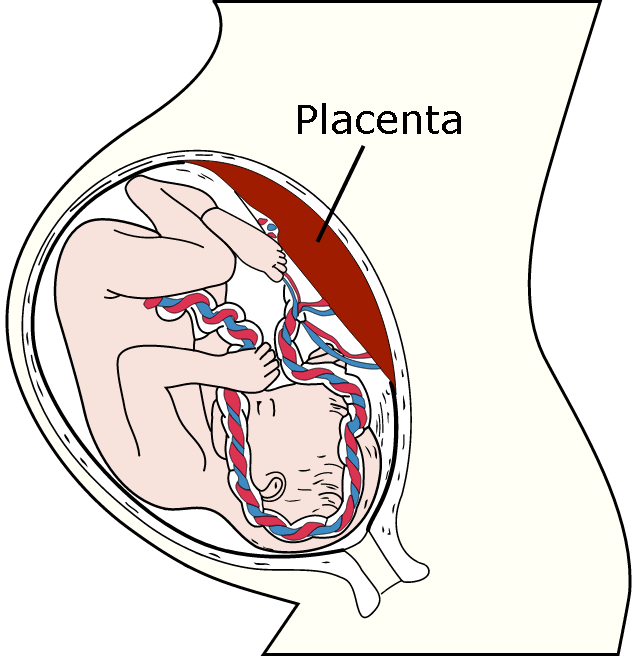
Placenta

An organ that connects the developing fetus to the uterine wall to allow nutrient uptake, waste elimination, and gas exchange via the mother's blood supply:

Placenta

Placenta
[image source: en.wikipedia.org/wiki/Placenta]


Share

Terminism

The Christian doctrine that there is a time limit for repentance from sin, after which God no longer wills the conversion and salvation of that person:

Terminism


Share

My Empire

A city building game with an ancient Greco-Roman theme, developed and published by Playfish and was released in via Facebook in May 2010; it became the inaugural winner of the Social Network Game category at the 2011 BAFTA Video Game Awards:

My Empire


Share

webOS

A proprietary mobile operating system running on the Linux kernel, initially developed by Palm, which was later acquired by HP:

webOS

Share
Rem:

A mobile operating system, also known as a mobile OS, a mobile platform, or a handheld operating system, is the operating system that controls a mobile device or information appliance—similar in principle to an operating system such as Windows, Mac OS, or Linux that controls a desktop computer or laptop. However, they are currently somewhat simpler, and deal more with the wireless versions of broadband and local connectivity, mobile multimedia formats, and different input methods [source: Mobile operating system].

Friday, April 8, 2011

Aurora

A natural light display in the sky, particularly in the polar regions, caused by the collision of charged particles directed by the Earth's magnetic field:


Aurora


Aurora

Aurora


Share


Triquetra

A particular shape formed of three vesicae piscis:


Triquetra

Triquetra
Triquetra

Triquetra
Triquetra

Note: Sometimes a Triquetra is drawn with an added circle in or around it:

Triquetra

Triquetra


Share


Equinox

It occurs twice a year, when the tilt of the Earth's axis is inclined neither away from nor towards the Sun, the center of the Sun being in the same plane as the Earth's equator:


Equinox


Share